Nomad & Expat Life
Tbilisi vs Batumi for Digital Nomads: Pros & Cons
Tbilisi vs Batumi for digital nomads - compare cost of living, coworking, wifi, nightlife, and community to choose your ideal Georgia base in 2025.

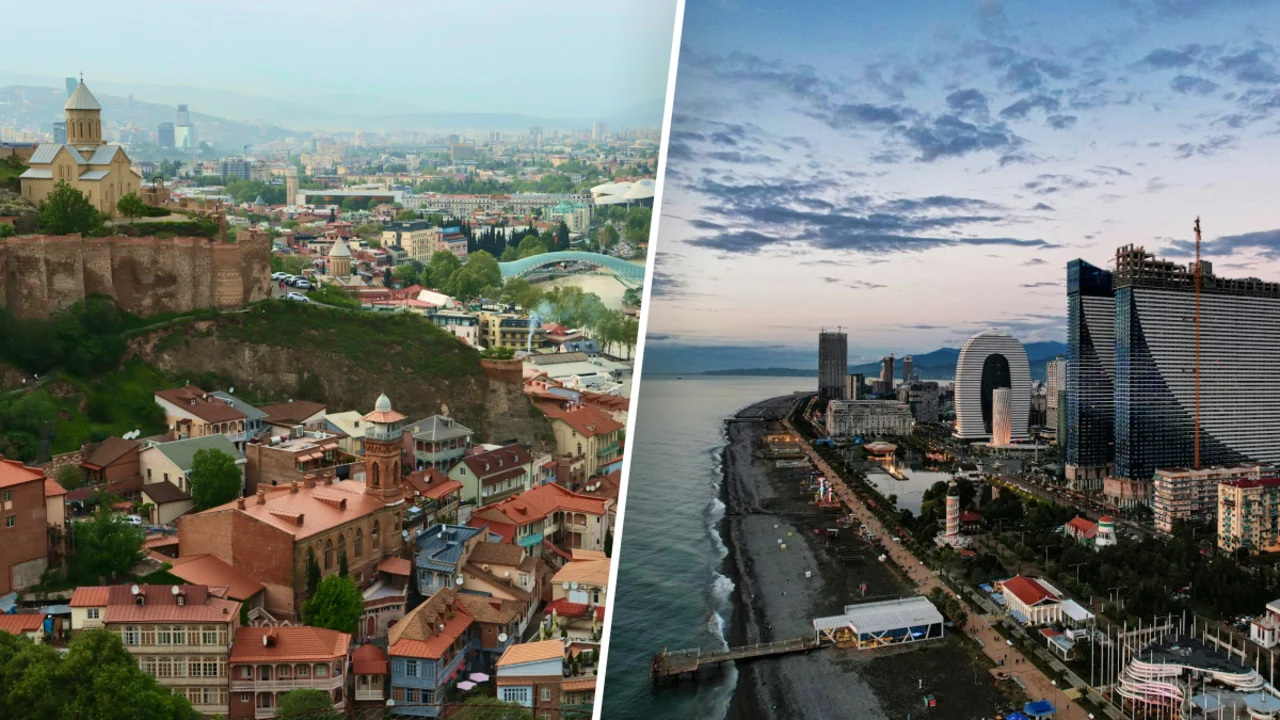
Georgia has become one of the top destinations for remote workers, and for good reason.
The country offers a 365-day visa-free stay for most nationalities, a favorable 1% tax rate for freelancers, and a cost of living that stretches your budget further than most of Europe.
But if you're planning to base yourself here, you'll face an important decision: the capital city buzz of Tbilisi or the coastal calm of Batumi.
This guide breaks down both cities so you can pick the right fit for your work style and lifestyle.
Quick Summary:
Tbilisi has a larger nomad community, more coworking spaces, and better nightlife options
Batumi is roughly 5-20% cheaper with beachside living and a slower pace of life
Both cities offer reliable wifi (40+ Mbps median) and the same visa and tax benefits
Tbilisi works better for networking and year-round stays while Batumi shines during summer
Weather differs sharply - Tbilisi has dry heat up to 35°C while Batumi is humid with frequent rain
Quick Comparison - Tbilisi VS Batumi
Before we dive in and cover all the details, here’s a quick comparison of the two cities!
Factor | Choose Tbilisi If... | Choose Batumi If... |
|---|---|---|
Community | You want an active nomad scene with regular meetups and events | You prefer a smaller, tighter-knit expat circle |
Lifestyle | You crave variety in food, nightlife, and activities | Beach access and sea views matter most to you |
Budget | You're okay paying a bit more for convenience | Saving money is a top priority |
Work Style | You need multiple coworking options and laptop-friendly cafes | You can work from home or a single cafe without issue |
Timing | You're staying long-term or visiting in spring/fall | You're coming during summer (June-September) |
Weather | You prefer dry heat and can handle 35°C summers | You'd rather have cooler temps but don't mind humidity and rain |
Pace | You like city energy with things happening around you | You want a quieter environment for deep focus work |
Travel | You want easy access to wine country and mountain hikes | You want budget flights via Kutaisi airport or proximity to Turkey |
Cost of Living Comparison - Tbilisi VS Batumi
Expense | Tbilisi | Batumi | Notes |
|---|---|---|---|
1-bedroom apartment (center) | $500-800/month | $400-550/month | Batumi prices spike in summer |
1-bedroom apartment (outside center) | $350-500/month | $300-400/month | Off-season Batumi can drop to $250 |
Meal at inexpensive restaurant | $5-8 | $4-7 | Both cities offer cheap local food |
Dinner for two at mid-range restaurant | $25-40 | $20-35 | Tbilisi has more upscale options |
Monthly groceries | $150-200 | $130-180 | Similar prices, Batumi has fresher seafood |
Coffee at cafe | $2-3 | $2-3 | Nearly identical |
Coworking (monthly) | $80-150 | $50-100 | Fewer options in Batumi |
Utilities (electric, water, gas) | $40-60 | $35-50 | Both very affordable |
High-speed internet (100 Mbps) | $12-18 | $12-18 | Same providers operate in both cities |
Taxi across town | $3-5 | $1-3 | Batumi is smaller, shorter rides |
Monthly public transport | $15-20 | $10-15 | Tbilisi has metro, Batumi does not |
Single nomad total | $800-1,500/month | $700-1,200/month | Depends heavily on lifestyle |
Tbilisi for Digital Nomads
Why Nomads Love Tbilisi
Tbilisi has earned its spot in the top 15 digital nomad destinations worldwide for a reason. The city of 1.3 million people generates half of Georgia's GDP and has developed the infrastructure to match. You'll find a proper metro system, dozens of laptop-friendly cafes, and a coworking scene that rivals many European capitals.
The nomad community here is well-established. Facebook groups stay active, Couchsurfing meetups happen regularly, and coworking spaces like Impact Hub (located in the Fabrika complex) host events that bring remote workers together. The Tbilisi Running Club pulls in a mix of locals, expats, and travelers representing dozens of countries. If you're the type who works better with a social calendar, Tbilisi delivers.
Food options go far beyond khachapuri and khinkali. In a single neighborhood, you can grab a French-style breakfast, have traditional Georgian dumplings for lunch, hit an authentic Thai spot for a snack, and finish with a burger. Bassiani, the city's famous techno club, consistently ranks among the best in the world. Wine bars occupy old town buildings and hidden courtyards.
Nature access is better than you'd expect from a capital city. The Vake and Vera neighborhoods sit near parks where you can hike for hours. Mtatsminda mountain overlooks the city and offers trails right from the center. The wine region of Kakheti is a couple hours east, and the Caucasus mountains around Kazbegi are a half-day trip north.
The Downsides of Tbilisi
Tbilisi is no longer the bargain it was before 2022. The influx of Russians and Ukrainians fleeing the war pushed rental prices up and strained the housing market. While still cheaper than Western Europe, you'll need to budget more than the $500/month figures you might see in older blog posts.
Traffic and driving culture frustrate many newcomers. Drivers don't use turn signals, tailgate constantly, run red lights, and weave through traffic while texting. Pedestrian crossings feel like suggestions rather than rules. If you're taking taxis regularly or riding in marshrutkas (minibuses), be prepared for some white-knuckle moments.
Air quality in central areas suffers from old vehicles and congestion. Some nomads report that the pollution bothers them less than in cities like London because the particles are larger, but it's still noticeable, especially in summer.
Apartment hunting requires caution. Scams exist, and some landlords are difficult to work with. Always verify a realtor's credentials, never pay large sums upfront without seeing the apartment, and consider asking other nomads for referrals.
The summer heat catches some people off guard. Temperatures can climb past 35°C, and combined with the urban heat island effect, central Tbilisi gets uncomfortable in July and August.
Best Neighborhoods in Tbilisi for Remote Work
Vake - An up-and-coming area in the northwest with coworking spaces, cafes, and proximity to Vake Park. Popular with younger professionals and expats.
Vera - Central location with tree-lined streets, parks within walking distance, and a mix of old and new buildings. Good balance of quiet residential streets and nearby amenities.
Saburtalo - Northwest of center, close to the university, with good outdoor access and a more local feel. More affordable than Vake.
Sololaki - The historic old town with cobblestone streets and classic architecture. Charming but can be noisy and more touristy.
Coworking and Cafes in Tbilisi
Impact Hub - Located in Fabrika, a converted Soviet-era sewing factory that's become a creative hub. Offers meeting rooms, fast wifi, and a community vibe.
Terminal - Multiple branches across the city, well-equipped and professionally managed. Good for those who need a consistent workspace.
Stamba Hotel - Upscale coworking in a stylish hotel setting. Higher-end option for those who want a polished environment.
Prospero's Books & Caliban's Coffee - A bookstore-cafe combo that's popular with writers and readers. Peaceful atmosphere, though coffee quality could be better.
The Coffee Place - Frequently mentioned by nomads as a reliable spot with decent wifi and good coffee.
Batumi for Digital Nomads
Why Nomads Love Batumi
Batumi offers something Tbilisi can't - the sea. The 7-kilometer boardwalk along the Black Sea coast is perfect for morning runs, evening walks, or clearing your head between work sessions. Sea view apartments are common and often cost less than a windowless studio in many European cities.
The cost of living drops noticeably compared to Tbilisi. Outside of peak summer season, you can find a decent one-bedroom with a sea view for $300-400/month. Taxis cost $1-2 for most trips within the city. Local produce is fresh and cheap, and seafood is both better and more affordable than in the capital.
The city is compact and walkable. At roughly one-tenth the size of Tbilisi, you can reach most places on foot without dealing with metro crowds or traffic jams. The Old Town has charm, with historical buildings, cafes, and bars clustered together.
Weather works in Batumi's favor during summer. While Tbilisi bakes at 35°C, Batumi rarely exceeds 29°C thanks to the sea breeze. If you're sensitive to heat, the coastal climate is more bearable for productive work days.
An emerging nomad scene has developed, largely driven by Russians, Belarusians, and Ukrainians who relocated after 2022. They've opened coffee shops, coworking spaces, and bars that cater to remote workers. The community is smaller than Tbilisi's but growing.
Kutaisi airport sits about an hour away by taxi ($20-25) and offers budget flights to destinations across Europe on carriers like Wizz Air. If you're hopping between Georgia and other countries regularly, this can save significant money compared to flying through Tbilisi.
The Downsides of Batumi
Batumi's biggest weakness is its seasonality. The city comes alive from June through September when tourists flood in, events happen, and the boardwalk buzzes with energy. From October through May, it empties out. Many restaurants and bars close or reduce hours. The nomad community shrinks. If you're someone who needs social activity to stay motivated, winter in Batumi can feel isolating.
The humid subtropical climate means rain - lots of it. Batumi receives significantly more rainfall than Tbilisi, and humidity stays high year-round. If you dislike gray, rainy days, this might not be your place.
International food options are limited. You can eat excellent Georgian food cheaply, but if you're craving Thai, Mexican, or Indian, your choices are few. Supermarkets are smaller and less well-stocked than in Tbilisi.
The construction boom has produced apartment towers that look impressive but are often poorly built. Noise carries between units, elevator waits can waste chunks of your day in high-rises, and build quality is inconsistent. Inspect any apartment carefully before committing.
English is spoken less frequently than in Tbilisi, especially among older residents. Russian helps more here given the historical tourism patterns. Basic transactions can require more patience and gesturing.
Best Neighborhoods in Batumi for Remote Work
New Boulevard - Modern high-rises popular with foreigners, close to the beach and boardwalk. Convenient but can be noisy and buildings vary in quality.
Old Town - Historic character, charming cafes, bars and restaurants. More authentic feel but fewer modern apartment options.
Agmashenebeli neighborhood - More affordable, a bit farther from the tourist center, popular with longer-term residents.
Outskirts - Rental houses on the edges of town offer quiet and greenery at lower prices, though you'll need transport to reach the center.
Coworking and Cafes in Batumi
The coworking scene in Batumi is smaller but developing. Most nomads work from cafes or their apartments.
Look for the growing number of specialty coffee shops opened by the expat community - many of these have good wifi and welcome laptop workers. The boardwalk area has several options, and Old Town has quieter spots.
Some hostels offer coworking setups aimed at digital nomads, though quality varies. If dedicated coworking matters to you, research specific options before arriving or plan to work primarily from home.
Internet and Connectivity
Both Tbilisi and Batumi offer reliable internet for remote work. Median speeds hover around 40 Mbps, which handles video calls, screen sharing, and most remote work tasks without issues.
Fiber connections running 100 Mbps are available in both cities for around $12-18/month if you're renting long-term and want to set up your own connection. The main providers (Magti, Silknet) operate in both locations.
A few practical tips:
Always ask your host or landlord about wifi speed before booking. Some apartments sat empty during COVID and hosts cut back on internet packages to save money.
Buy a local SIM card when you arrive. Mobile data serves as a backup during outages and gives you connectivity while exploring.
Consider an eSIM if you want reliability without dealing with physical cards.
Wifi in cafes and coworking spaces generally works well enough for standard tasks. Don't expect blazing speeds, but video calls usually function fine.
Internet can be spottier outside city centers in both locations. If you're considering an apartment on the outskirts, verify the connection quality before committing.
Visa and Tax Situation
Both cities benefit from Georgia's famously friendly policies for remote workers.
Visa-free stay: Citizens of 95+ countries can stay up to 365 days without a visa. No application, no fees, no paperwork. The count resets if you leave and re-enter, even briefly. This makes Georgia one of the most accessible long-term destinations for nomads worldwide.
Tax benefits: If you register as an individual microentrepreneur, you pay just 1% tax on income. Standard tax rates are 20%, but the microentrepreneur status is available to freelancers and small business owners earning under a certain threshold.
Tax residency: If you spend at least 183 days in Georgia within any 12-month period, you qualify as a tax resident. This doesn't require a complicated application - it happens automatically. The days don't need to be consecutive; you can spread your time across multiple visits.
Banking: Opening a Georgian bank account as a foreigner is possible but can be tricky. Requirements vary by bank, and some are more expat-friendly than others. Many nomads manage fine with international accounts and cards, but a local account simplifies paying rent and utilities.
These rules apply identically whether you're based in Tbilisi, Batumi, or anywhere else in Georgia.
Weather Comparison
Month | Tbilisi | Batumi |
|---|---|---|
January | Cold, 0-6°C, occasional snow | Mild, 5-10°C, rainy |
February | Cold, 1-8°C | Mild, 6-11°C, rainy |
March | Warming, 5-13°C | Mild, 8-13°C, rainy |
April | Pleasant, 10-18°C | Warming, 11-17°C, rainy |
May | Warm, 14-23°C | Warm, 15-21°C, less rain |
June | Hot, 18-28°C | Warm, 19-25°C |
July | Hot, 21-31°C | Warm, 22-27°C, humid |
August | Hot, 21-31°C, can hit 35°C+ | Warm, 22-28°C, humid |
September | Warm, 16-26°C | Warm, 19-25°C |
October | Cooling, 10-18°C | Mild, 14-20°C, rain returns |
November | Cool, 5-12°C | Mild, 10-15°C, rainy |
December | Cold, 1-7°C | Mild, 7-12°C, rainy |
Key differences:
Tbilisi has a continental climate with distinct seasons. Summers are hot and dry, winters are cold with occasional snow.
Batumi has a humid subtropical climate. Temperatures stay milder year-round, but rain falls frequently and humidity runs high.
Tbilisi's humidity exceeds comfortable levels only about 17% of the time. Batumi exceeds comfort levels 77% of the time.
Spring (April-May) and fall (September-October) are the best times for Tbilisi.
Summer (June-September) is peak season for Batumi.
Getting Between Tbilisi and Batumi
The cities sit about 370 kilometers apart. Several options connect them:
Train: A comfortable overnight sleeper or daytime service runs between the cities. The journey takes 5-6 hours. Tickets are affordable and the experience is pleasant. Book through Georgian Railways.
Bus/Marshrutka: Cheaper but less comfortable. Takes about 6 hours depending on traffic and stops.
Flight: Short flights are available but often not worth it once you factor in airport time. Only makes sense if you find a very cheap fare.
Car: The drive takes about 5-6 hours. Road conditions are generally decent on the main route. Car rentals are available in both cities.
The hybrid approach: Many nomads split their time between both cities. Summers in Batumi for the beach and cooler temperatures, spring and fall in Tbilisi for the community and activities. The train makes this rotation easy and affordable.
FAQs
Is Tbilisi or Batumi better for digital nomads?
It depends on your priorities. Tbilisi is better if you value community, networking opportunities, variety in food and activities, and year-round consistency. Batumi is better if you prioritize lower costs, beach access, a quieter environment, and plan to visit during summer months. Many experienced nomads recommend trying both before committing to one.
How much does it cost to live in Tbilisi vs Batumi per month?
A single digital nomad can live comfortably in Tbilisi for $800-1,500 per month depending on lifestyle choices. Batumi runs about $700-1,200 per month. The main savings in Batumi come from lower rent and cheaper transportation. Food costs are similar in both cities.
Is the internet good enough for remote work in Georgia?
Yes. Both Tbilisi and Batumi offer median speeds around 40 Mbps with fiber connections available up to 100+ Mbps. Video calls, screen sharing, and standard remote work tasks run smoothly. Always verify wifi quality with your accommodation before booking, and consider a local SIM card as backup.
Can I stay in Georgia for a year without a visa?
Citizens of 95+ countries can stay in Georgia for up to 365 days without a visa. No application or fees required - you simply enter the country. The counter resets if you leave and re-enter, allowing indefinite stays with brief border runs.
What are the best neighborhoods for digital nomads in Tbilisi?
Vake, Vera, and Saburtalo are the most popular choices. Vake offers a modern feel with coworking spaces and cafes. Vera provides a central location with parks nearby. Saburtalo is more affordable with good outdoor access. Sololaki in the old town appeals to those wanting historic charm but tends to be noisier.
Is Batumi worth visiting in winter?
It depends on what you're looking for. Batumi is warmer than Tbilisi in winter (7-12°C vs 1-7°C), but the city empties out and many businesses close or reduce hours. If you want quiet and solitude for focused work, winter Batumi works. If you need social activity and things to do, you'll likely find it too quiet.
How do I avoid apartment scams in Georgia?
Always verify a landlord or agent's credentials before paying anything. Ask other nomads for referrals through Facebook groups or forums. Never transfer large sums without seeing the apartment in person. Use established platforms like SS.ge for listings. Be cautious of deals that seem too good to be true. Consider booking a short Airbnb stay first while you search for longer-term housing.
What is the 1% tax rate for freelancers in Georgia?
Georgia offers a special status called individual microentrepreneur for freelancers and small business owners. Those who qualify pay just 1% tax on their income instead of the standard 20% rate. The registration process is straightforward. Consult with a local accountant to confirm eligibility and handle the paperwork.
Is Georgia safe for solo digital nomads?
Georgia is generally safe. Both Tbilisi and Batumi have low crime rates, and violent crime against foreigners is rare. The main safety concerns are aggressive driving (be careful as a pedestrian) and occasional scams targeting tourists. Women traveling solo report feeling safe, though standard precautions apply. The political situation has seen some protests, particularly in Tbilisi, but these are typically peaceful and localized.
How far is Batumi from Tbilisi?
Batumi is about 370 kilometers west of Tbilisi. The train takes 5-6 hours, driving takes about 5-6 hours, and buses take roughly 6 hours. Flights exist but aren't worth it for such a short distance once you factor in airport time. Many nomads rotate between the two cities seasonally.
Final Thoughts
Choosing between Tbilisi and Batumi comes down to what kind of work environment and lifestyle you want. Tbilisi offers the energy, community, and options of a real capital city. Batumi offers the calm, affordability, and natural beauty of a coastal town. Both share Georgia's core advantages - the generous visa policy, low taxes, affordable living, and solid internet infrastructure.
If you're uncertain, consider the hybrid approach. Spend a few weeks in each city to experience them firsthand. The train connection makes moving between them easy, and many nomads find that splitting their year between beach and city gives them the best of both worlds.