Day Trips
11 Best Day Trips from Tbilisi: Mountains, Monasteries & Wine Regions
Discover the 11 best day trips from Tbilisi - from the Caucasus peaks of Kazbegi to ancient cave monasteries and the vineyards of Kakheti.

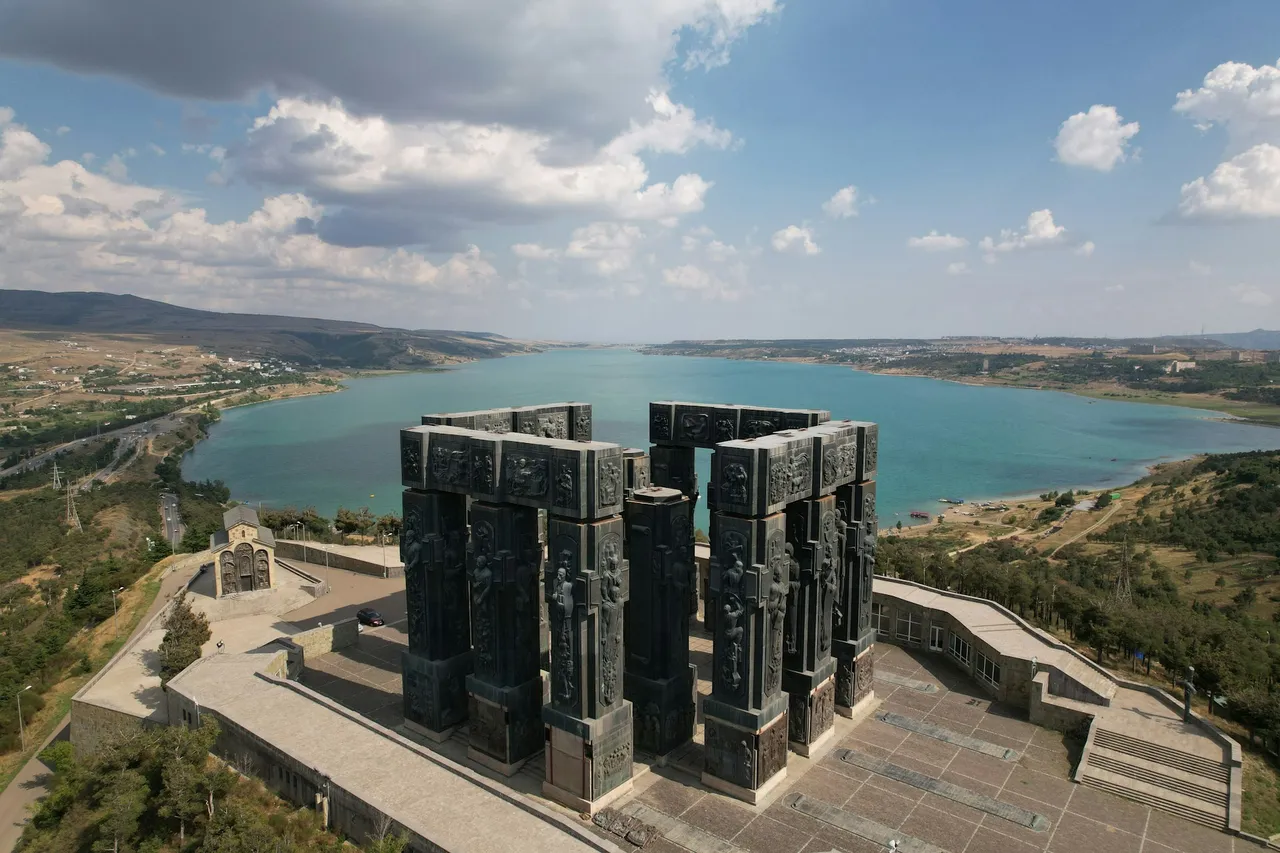
Tbilisi makes an ideal base for exploring Georgia's diverse landscapes.
Within a few hours of the capital, you'll find snow-capped Caucasus peaks, medieval cave cities carved into cliffsides, and rolling vineyards producing wine using 8,000-year-old techniques.
The country packs an extraordinary amount of variety into a compact area - mountains, monasteries, and marani wine cellars all sit within easy reach of the city.
Here are the best escapes from Tbilisi, whether you're craving adventure, history, or a glass of amber wine.
Quick Summary:
Kazbegi offers the most dramatic mountain scenery, just 3 hours north via the Georgian Military Highway
Kakheti wine region (Sighnaghi/Telavi) is Georgia's answer to Tuscany, under 2 hours away
Mtskheta, a UNESCO World Heritage Site, sits only 20 minutes from Tbilisi
David Gareji monastery and the rainbow-striped desert landscape make for a unique adventure
Most day trips work well by marshrutka, guided tour, or rental car
11 Best Day Trips from Tbilisi
1. Kazbegi and the Georgian Military Highway
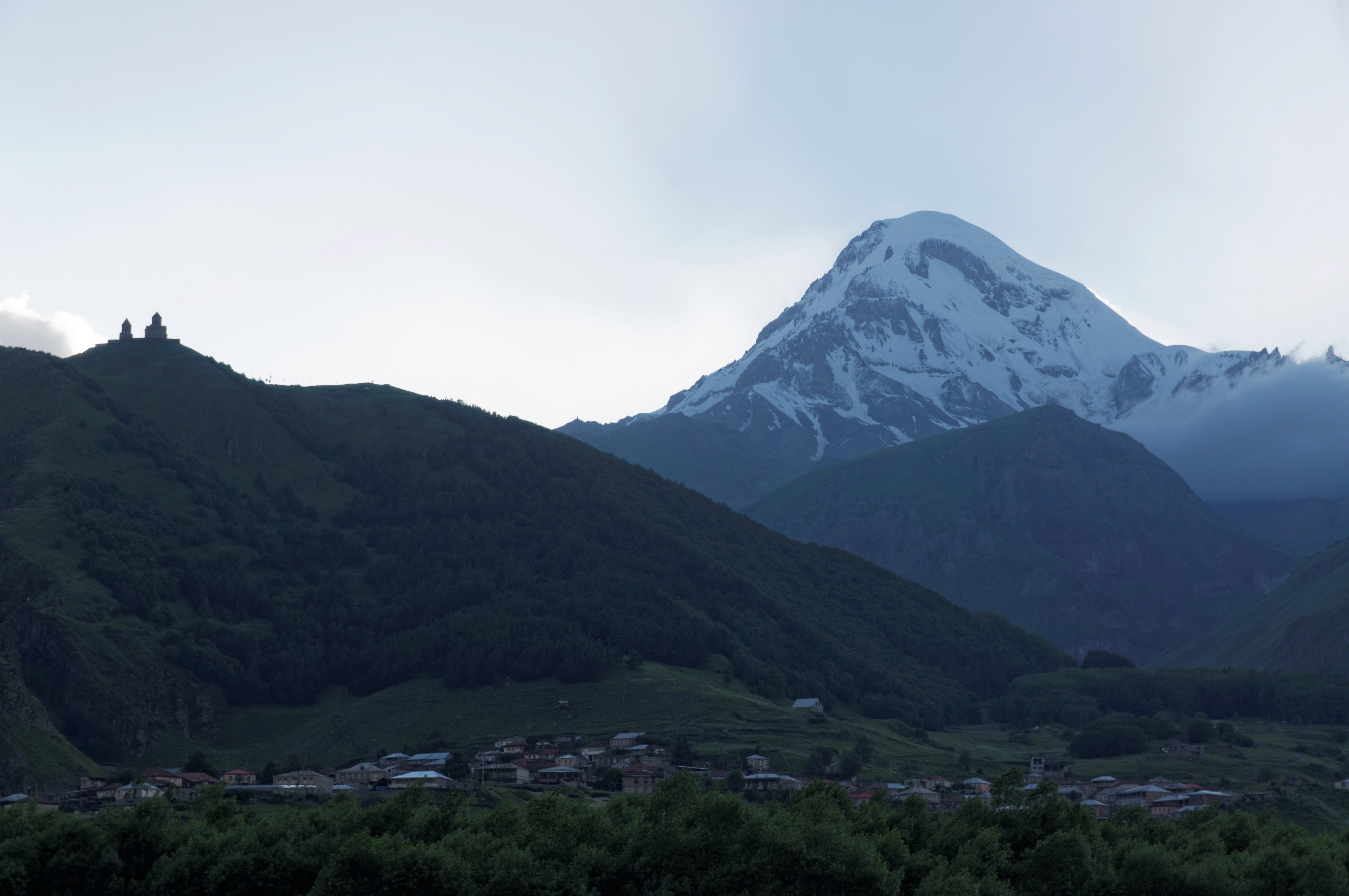
The drive north along the Georgian Military Highway ranks among the most scenic road trips in the Caucasus. This 150-kilometer route climbs through dramatic mountain terrain, passing alpine meadows, ancient watchtowers, and villages that seem frozen in time.
The first major stop is Ananuri Fortress, a medieval castle complex perched above the turquoise waters of the Zhinvali Reservoir. The 17th-century fortification features two churches adorned with carved reliefs and offers panoramic views over the dam.
Continuing north, the road ascends to the Jvari Pass at 2,379 meters before descending to Stepantsminda (historically called Kazbegi). The main attraction here is Gergeti Trinity Church, an iconic 14th-century stone church perched at 2,170 meters with Mount Kazbek (5,047 meters) as its backdrop. You can hike up to the church in about 90 minutes or take a 4x4 vehicle for around 80-100 GEL round trip.
The journey takes approximately 3 hours each way. Marshrutka vans depart from Didube station in Tbilisi for around 25 GEL, though joining a guided tour (from around $25-40 per person) is more practical as it includes stops at viewpoints and Ananuri. The route passes through a one-way tunnel that can cause delays, so budget extra time during peak season.
2. Kakheti Wine Region and Sighnaghi
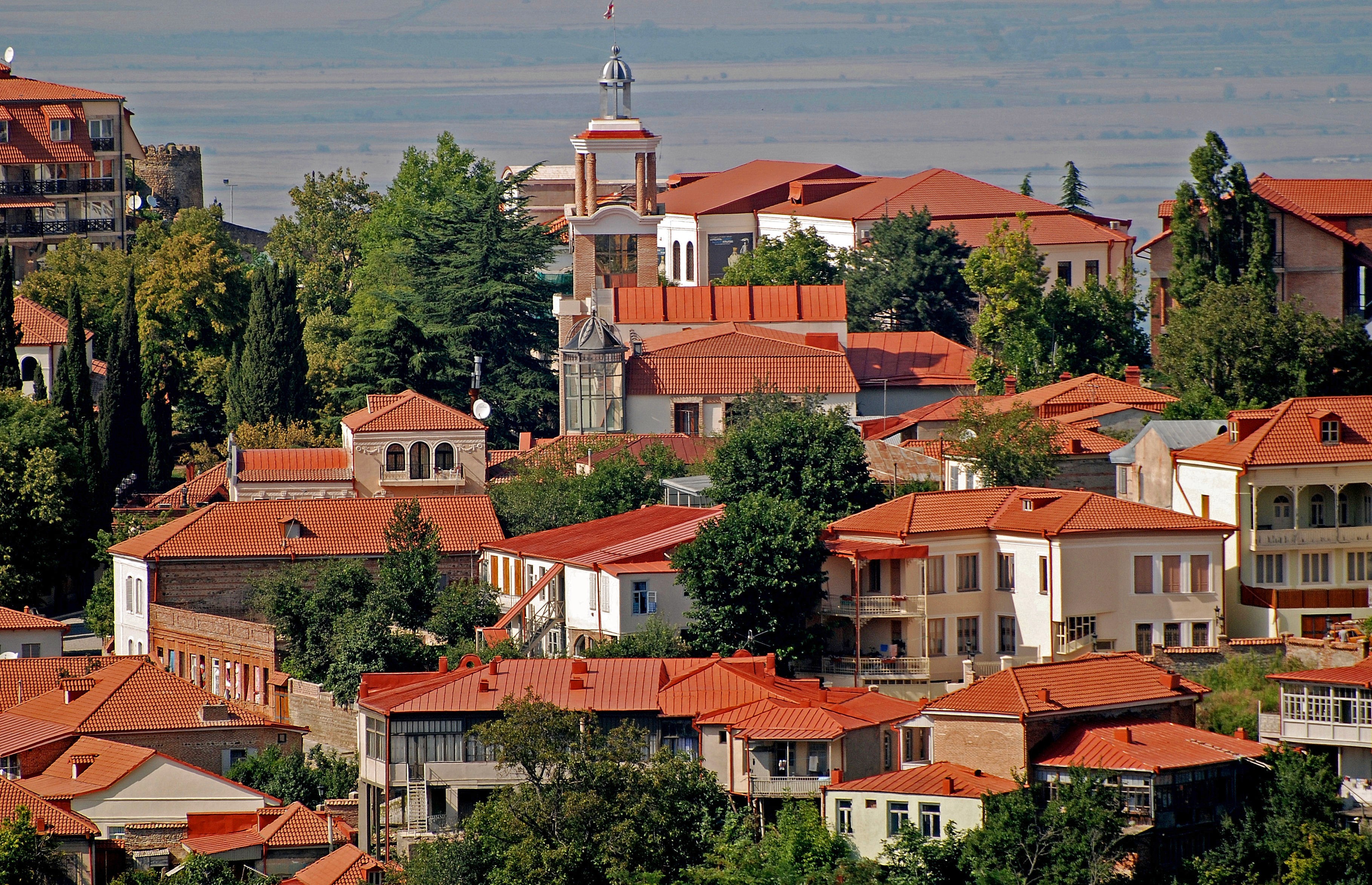
Georgia claims to be the birthplace of wine - and with 8,000 years of continuous winemaking, the evidence is hard to dispute. Kakheti produces roughly 80% of Georgian wine and visiting this region ranks as one of the most rewarding day trips from the capital.
The hilltop town of Sighnaghi, nicknamed the "City of Love," overlooks the Alazani Valley with the Greater Caucasus mountains forming a distant backdrop. The town's 18th-century defensive walls remain largely intact, and the narrow cobblestone streets are lined with traditional wooden balconies. Before reaching Sighnaghi, most tours stop at Bodbe Monastery, which houses the relics of St. Nino - the woman who brought Christianity to Georgia in the 4th century.
Wine tastings are the main event here. You can visit commercial wineries like Kindzmarauli Corporation or smaller family-run operations where qvevri (large clay vessels buried underground) are still used for fermentation. Pheasant's Tears Winery in Sighnaghi serves an excellent restaurant menu alongside natural wines made using traditional methods.
The drive from Tbilisi takes about 1.5-2 hours. Marshrutka vans run from Samgori metro station for around 10 GEL. However, wine touring and driving don't mix - a guided tour (from around 100-150 GEL per person) lets you taste freely without worrying about getting back.
3. Mtskheta
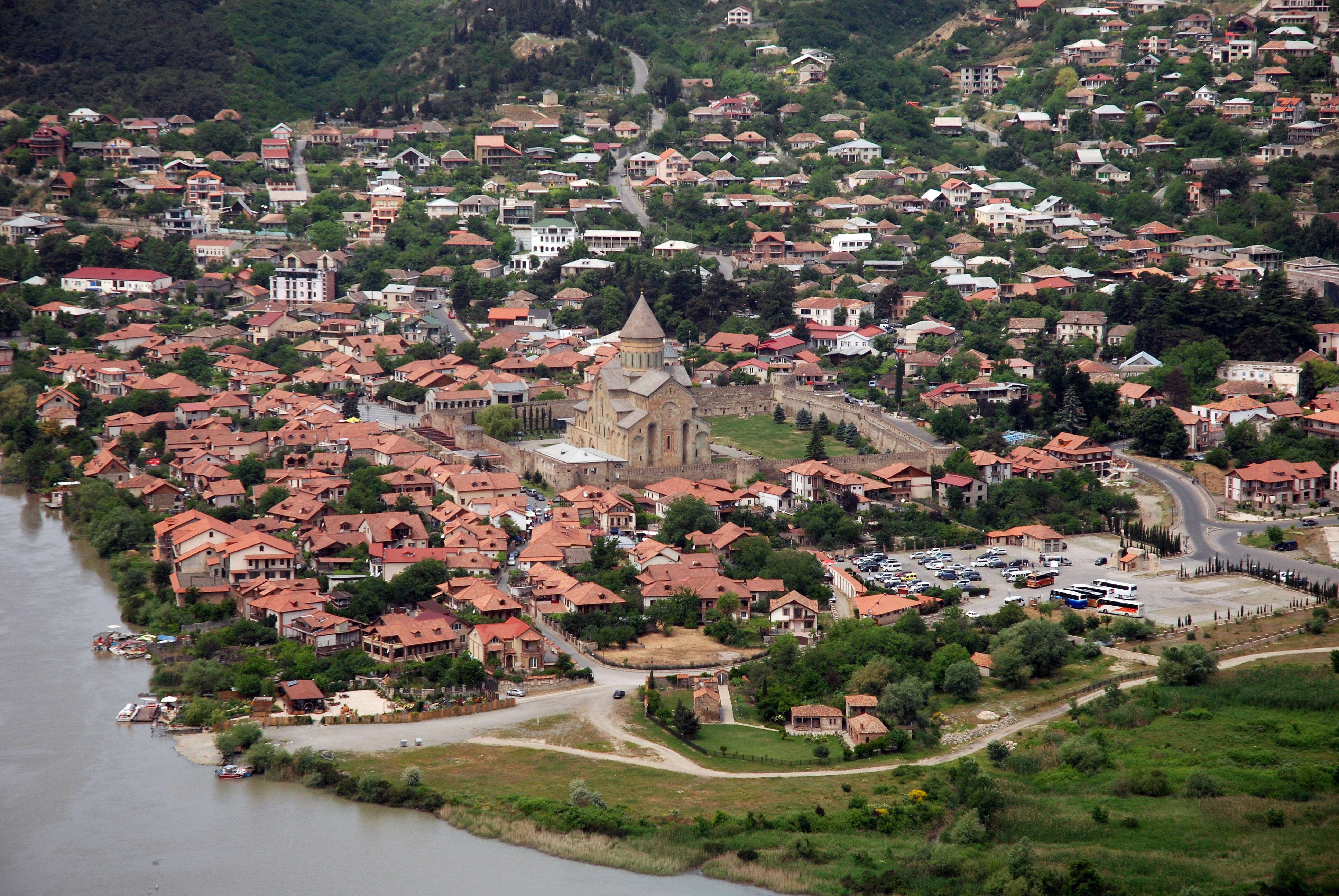
If you only have a few hours to spare, Mtskheta offers the quickest cultural fix outside Tbilisi. This ancient capital, located at the confluence of the Mtkvari and Aragvi rivers, served as Georgia's religious and political center for nearly a millennium.
The town holds UNESCO World Heritage status thanks to its collection of medieval churches. Svetitskhoveli Cathedral, built in the 11th century, is considered one of the most sacred places in Georgia - tradition holds that Christ's robe is buried beneath it. The cathedral's interior features beautiful frescoes and carved stonework.
Across the river, Jvari Monastery sits atop a hill with commanding views over the valley and town below. This 6th-century church inspired the Georgian poet Mikhail Lermontov and remains a pilgrimage site. Getting to Jvari requires a taxi (about 15-20 GEL round trip from Mtskheta) as it's too far to walk.
Mtskheta lies just 20 kilometers from Tbilisi. Marshrutka vans leave from Didube station every 15-20 minutes and cost around 1.50 GEL. The ride takes 20-30 minutes. You can easily visit Mtskheta independently in a half-day or combine it with Jvari Monastery on a guided tour for around 60-80 GEL.
4. David Gareji Monastery
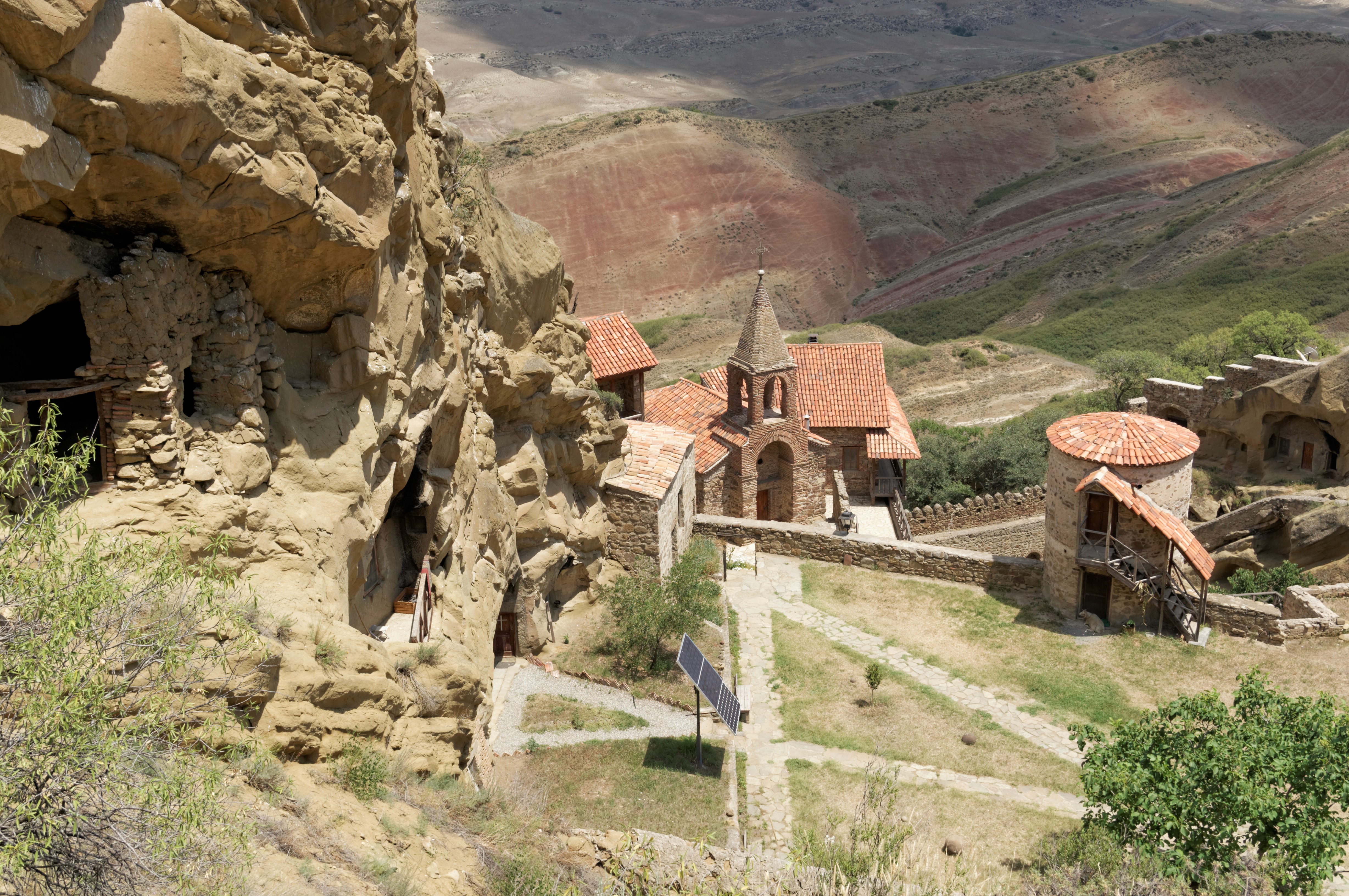
The cave monastery complex of David Gareji sits in a stark, semi-desert landscape unlike anywhere else in Georgia. Founded in the 6th century by one of the Assyrian Fathers who helped establish Christianity in the region, the monastery eventually grew to include 19 separate complexes spread across a ridge on the Georgian-Azerbaijani border.
The main site, Lavra, contains the original cave where St. David settled, along with monks' cells, a church, and a refectory. Climbing to the ridge above reveals the painted caves of Udabno (currently partially accessible due to border tensions with Azerbaijan), where medieval frescoes depicting biblical scenes survive in remarkably good condition.
The surrounding terrain - known as the Rainbow Mountains or Painted Desert - features colorful sedimentary rock formations striped in reds, yellows, and greens. This semi-arid landscape feels completely different from the lush forests and mountains elsewhere in Georgia.
David Gareji sits about 60-70 kilometers southeast of Tbilisi, but the journey takes roughly 2 hours due to road conditions. There's no regular marshrutka service, so options include the Gareji Line shuttle (around 40 GEL round trip, running May-October from Pushkin Park), guided tours (from around $35-50), or hiring a driver. Bring water, sun protection, and sturdy shoes for hiking.
5. Gori and Uplistsikhe
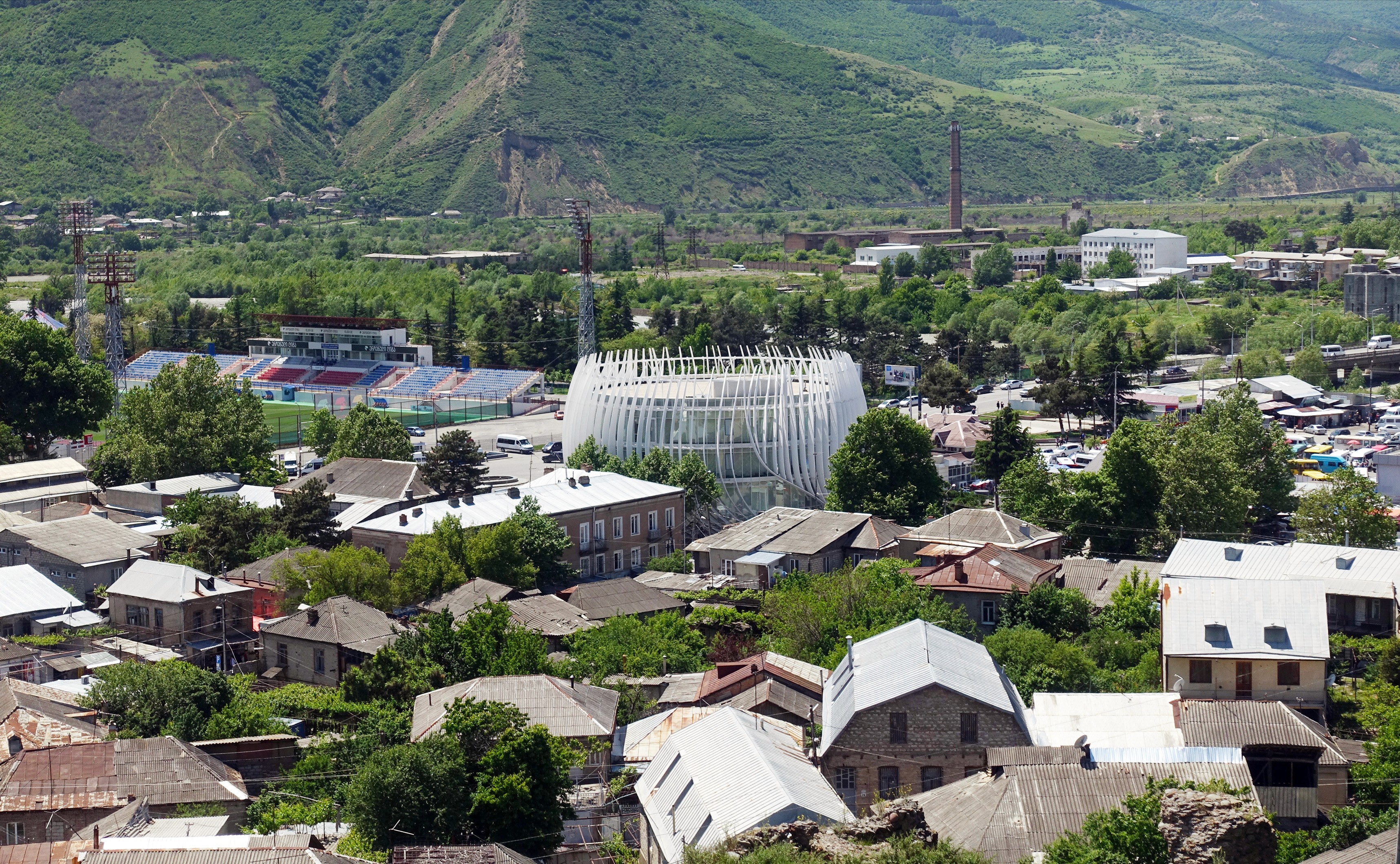
History buffs will find plenty to contemplate on a day trip combining Gori - birthplace of Joseph Stalin - with the ancient cave city of Uplistsikhe.
The Stalin Museum in Gori presents a surprisingly uncritical portrait of the Soviet dictator, displaying his personal effects, death mask, and the modest wooden house where he was born. The museum also contains Stalin's personal railway carriage, armored and equipped with its own bathroom and conference room. The experience feels like stepping back into Soviet-era propaganda, which makes it fascinating regardless of your politics.
Just 12 kilometers east of Gori, Uplistsikhe ("Lord's Fortress") ranks among Georgia's oldest urban settlements. People lived in these rock-hewn caves from the Early Iron Age (around 1,000 BC) until the Mongol invasions of the 13th century. Walking through the site reveals an ancient theater, a pharmacy, a pagan temple converted to a Christian church, and wine cellars - all carved directly from the rocky hillside.
Gori lies about 85 kilometers west of Tbilisi (1.5 hours by car). Marshrutka vans depart from Didube station hourly for around 5 GEL. From Gori, taxis to Uplistsikhe cost approximately 25-30 GEL round trip with waiting time. Many travelers combine Gori, Uplistsikhe, and Mtskheta on a single day tour (around 100-130 GEL per person).
6. Borjomi
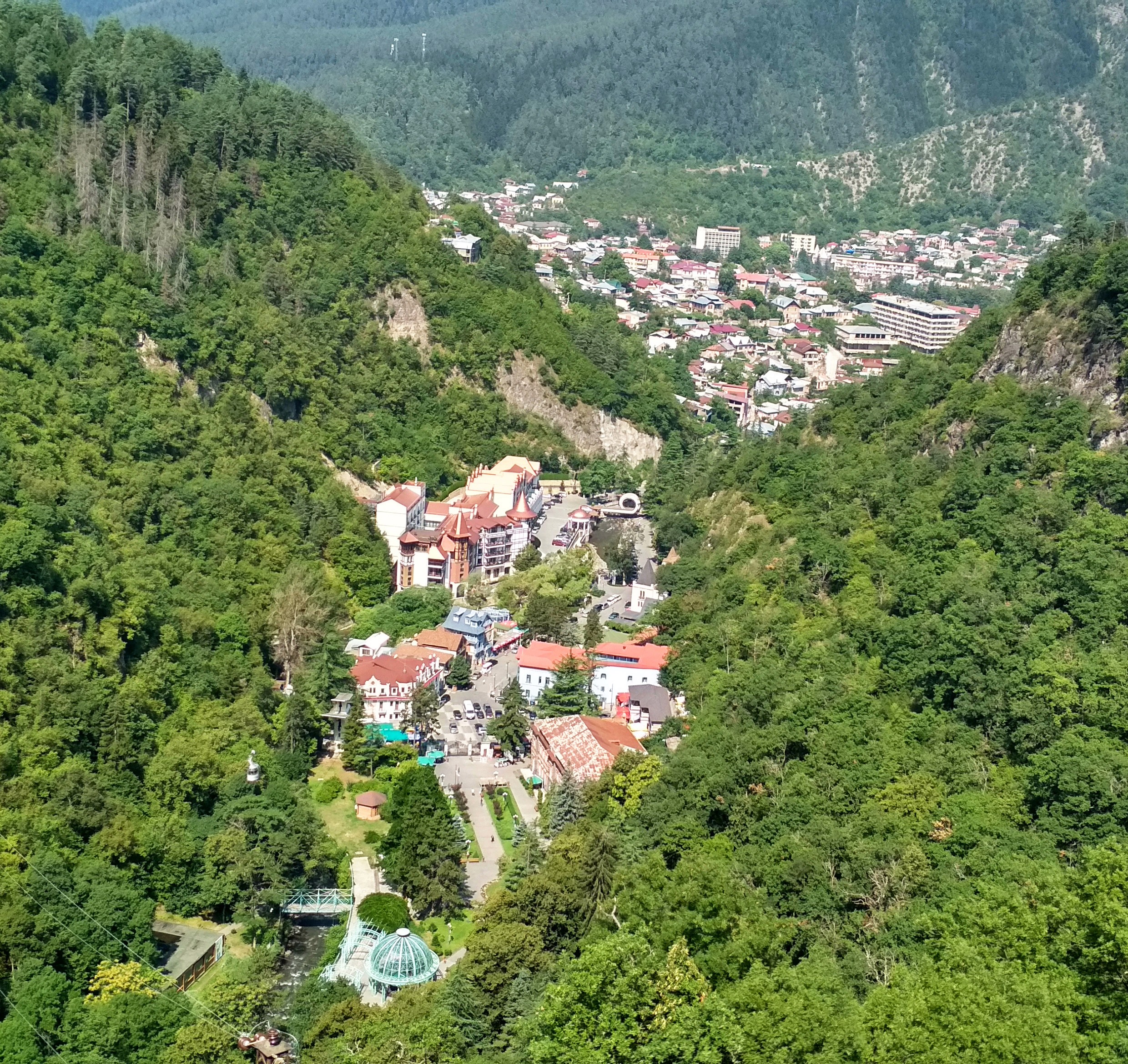
Famous for its mineral water (you've probably seen the distinctive green bottles), Borjomi also offers beautiful natural scenery and a relaxed spa-town atmosphere. The resort became popular with Russian aristocracy in the 19th century, including the Romanov family, who built a summer palace here.
The main attraction is Borjomi Central Park, where the original Ekaterina Spring flows from taps inside a decorative pavilion. The mineral water has a distinctive sulfurous taste - quite different from the bottled version you buy in shops. A cable car carries visitors up the forested hillside for views over the gorge, and if you walk about 3 kilometers upstream through the park, you'll reach a natural sulfur pool with a constant temperature of around 27°C.
Borjomi-Kharagauli National Park, one of the largest in the Caucasus, offers hiking trails ranging from easy day walks to multi-day treks. The nearby Green Monastery (Chitakhevi) dates to the 9th century and sits surrounded by forest.
The drive from Tbilisi takes about 2 hours (160 kilometers). Marshrutka vans depart from Didube station regularly and cost around 10-12 GEL. Borjomi works well as a standalone day trip or as a stop en route to Vardzia or Kutaisi.
7. Vardzia
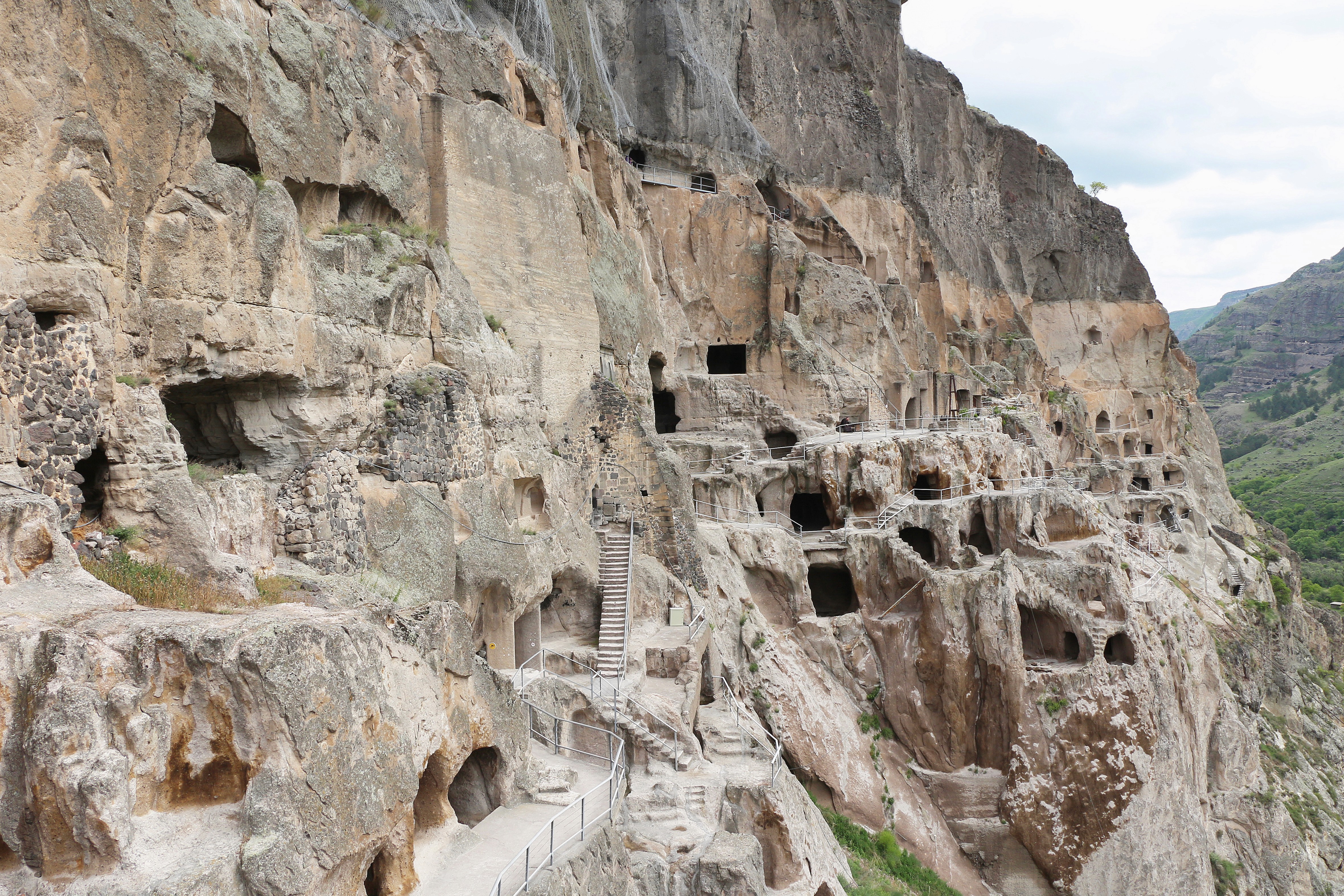
Georgia's most impressive cave monastery, Vardzia stretches across a sheer cliff face overlooking the Mtkvari River valley. At its peak in the 12th century, the complex housed up to 2,000 monks and contained 6,000 apartments spread across 13 levels - essentially an entire city carved into the rock.
Queen Tamar (one of Georgia's most revered monarchs) expanded the monastery from a defensive shelter into a spiritual center. The Church of the Dormition contains remarkable frescoes from the 1180s, including a portrait of Queen Tamar herself. An earthquake in 1283 destroyed roughly two-thirds of the complex, exposing the formerly hidden chambers to view - which is why you can now see the cave dwellings from the outside.
Beyond Vardzia, the area contains several other worthwhile stops: Khertvisi Fortress (one of Georgia's oldest fortifications), Rabati Castle in Akhaltsikhe, and the lesser-visited caves of Vanis Kvabebi.
At 270 kilometers from Tbilisi (about 4-5 hours driving), Vardzia pushes the limits of a comfortable day trip. Most tours last 12+ hours and include stops at Borjomi and Rabati (from around 150-200 GEL per person). For a less rushed experience, consider staying overnight in Akhaltsikhe or a guesthouse near Vardzia.
8. Telavi and the Tusheti Region
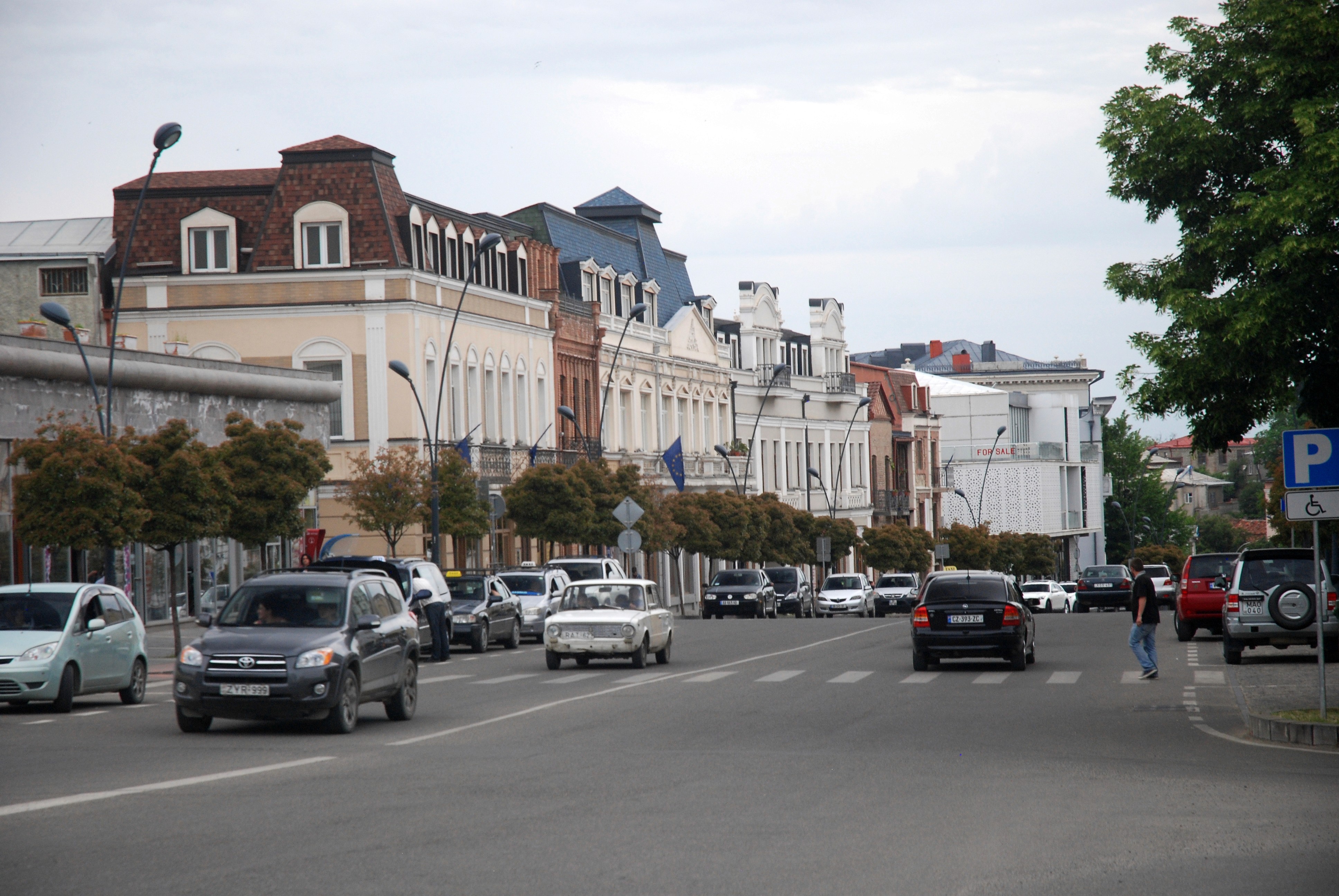
Telavi, the capital of Kakheti, offers a different flavor than Sighnaghi - less touristy, more authentically Georgian, and surrounded by some of the region's best wineries.
The town itself features a 2,000-year-old plane tree (claimed to be the oldest in Georgia), the Batonis Tsikhe fortress, and good restaurants serving local Kakhetian cuisine. The surrounding countryside is dotted with family wineries where you can learn about qvevri winemaking and participate in a supra - the traditional Georgian feast involving many courses and even more toasts.
Telavi also serves as the gateway to Tusheti, one of Georgia's most remote mountain regions. However, reaching Tusheti requires a spectacular but terrifying 4x4 drive over the Abano Pass (2,926 meters), which is only open from late June to early October. This trip definitely requires multiple days and a high-clearance vehicle.
Telavi lies about 100 kilometers from Tbilisi (2-2.5 hours). Marshrutka vans run from Ortachala station or Isani metro. Day tours focusing on Telavi and surrounding wineries typically cost 100-150 GEL per person and include several tastings plus lunch.
9. Gudauri
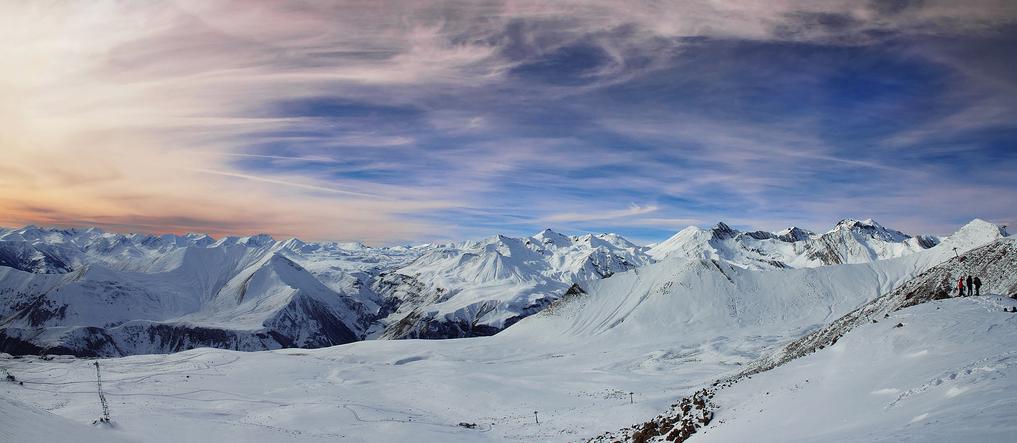
Georgia's premier ski resort sits just 2 hours north of Tbilisi along the Georgian Military Highway, making it one of the most accessible ski destinations in the region. The resort sits at elevations between 1,990 and 3,307 meters, with reliable snow conditions from December through April.
Even outside ski season, Gudauri attracts visitors for paragliding, hiking, and mountain biking. The resort has seen major development in recent years, with new lifts, hotels, and restaurants opening to meet growing demand.
From Gudauri, you can also access hiking trails into the surrounding mountains or continue north to Kazbegi - combining both destinations in a single (long) day trip is possible during summer months.
The drive from Tbilisi takes 2-2.5 hours depending on conditions. No public transport runs directly to Gudauri, so options include guided ski tours, transfers through tour operators, or taxi/private driver (around 150-200 GEL one way).
10. Prometheus Cave and Martvili Canyon
Western Georgia contains some remarkable natural formations, though they require a longer drive from Tbilisi. Prometheus Cave, near Kutaisi, is one of the largest caves in the Caucasus, featuring illuminated stalactites and stalagmites and an optional boat ride on an underground river.
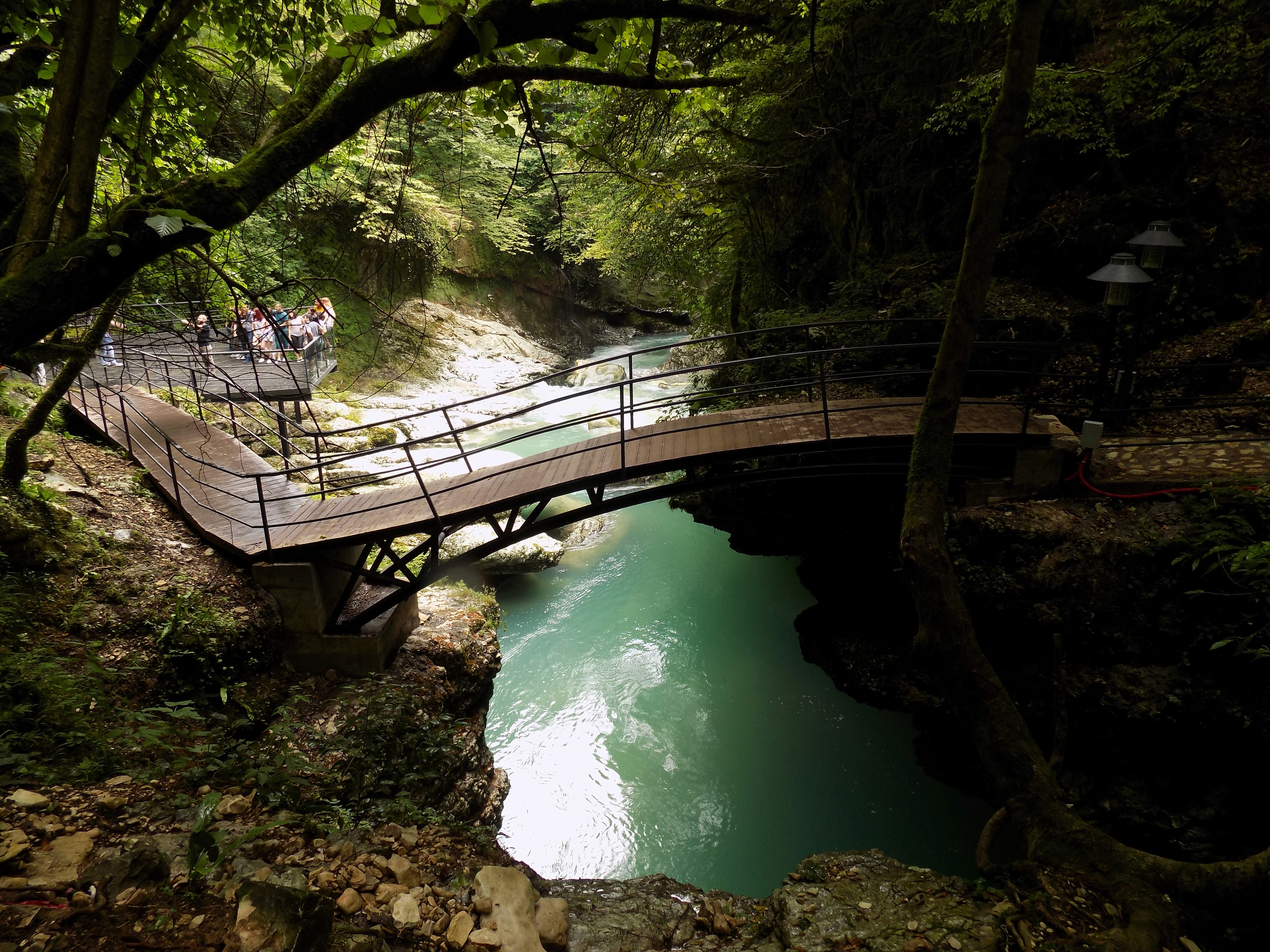
Martvili Canyon, about an hour from Kutaisi, offers boat trips through a narrow gorge with waterfalls cascading down the walls. The turquoise water and lush green surroundings create an almost tropical atmosphere.
These destinations sit about 4-5 hours from Tbilisi, making them challenging as day trips. Most travelers combine them with a night or two in Kutaisi, Georgia's second-largest city, which has its own attractions including the Bagrati Cathedral and Gelati Monastery (both UNESCO World Heritage Sites).
If you're determined to visit on a day trip, organized tours depart early morning and return late evening (from around 180-220 GEL per person). Entry fees are 40 GEL for Prometheus Cave and 17 GEL for Martvili Canyon.
11. Chiatura and Katskhi Pillar
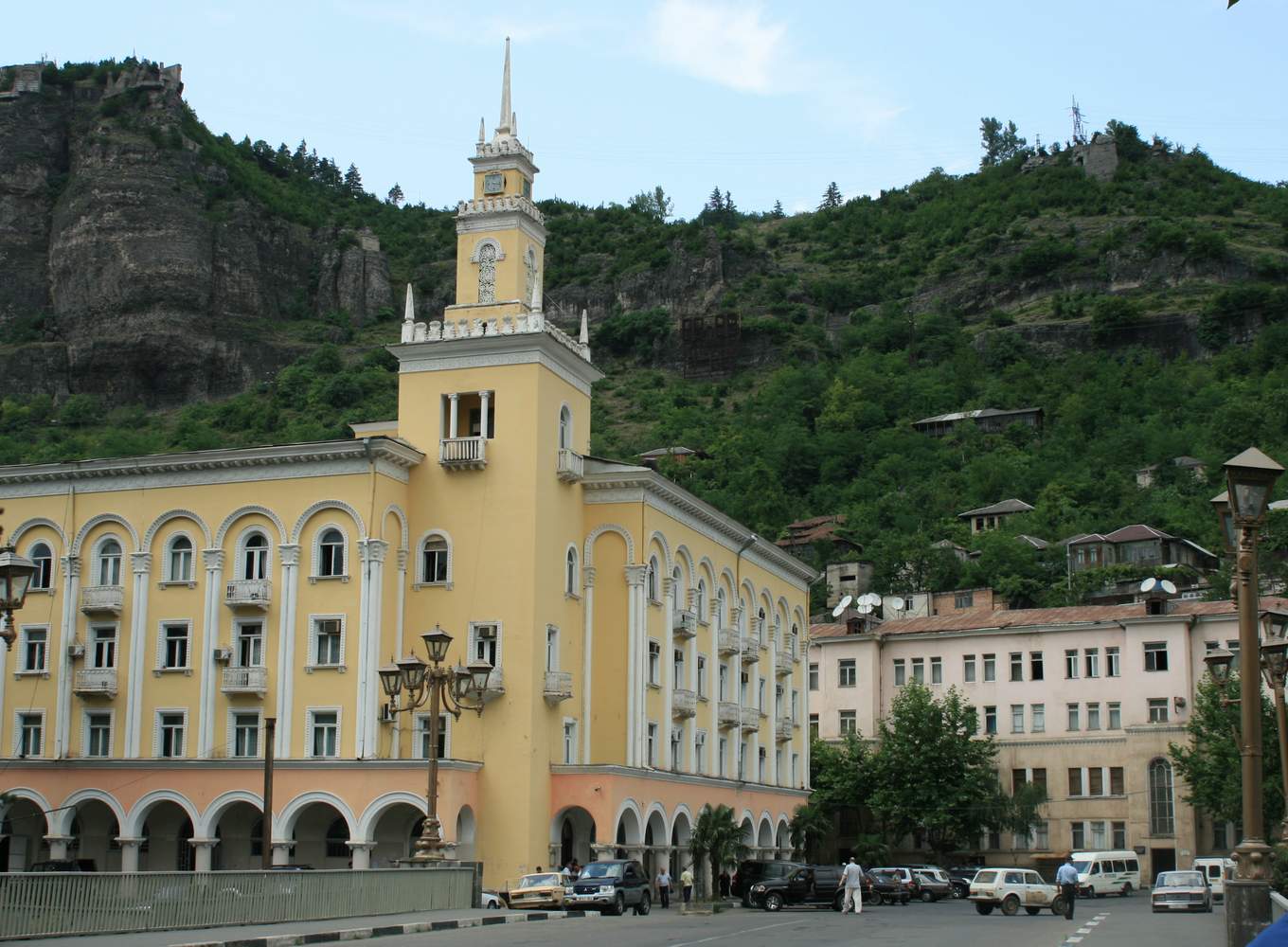
For something completely different, the mining town of Chiatura offers a journey into Georgia's Soviet past - and present. The town was built around manganese mining operations in the late 1800s and became a showpiece of Soviet industrial planning under Stalin's orders.
The main draw is Chiatura's network of cable cars, originally built to transport workers across the steep valley terrain. While the original Soviet-era cabins have been replaced with modern gondolas, several historic station buildings survive as examples of Brutalist architecture. As of late 2024, some of the original Soviet cable cars have been relaunched with new mechanisms.
Nearby, the Katskhi Pillar presents one of Georgia's most unusual religious sites - a 40-meter limestone monolith topped by a small church, accessible only by ladder. A monk has lived atop the pillar since the 1990s, though visitors cannot climb up. The surrounding monastery at the base welcomes travelers.
Chiatura lies about 200 kilometers northwest of Tbilisi (3-3.5 hours). There's no direct public transport, so a rental car or organized tour is necessary. The town is closer to Kutaisi and often visited as a side trip from there instead.
FAQ
What is the best day trip from Tbilisi for first-time visitors?
Kazbegi along the Georgian Military Highway offers the most complete introduction to Georgia's dramatic landscapes. The route includes medieval fortresses, alpine scenery, and the iconic Gergeti Trinity Church against Mount Kazbek. The journey itself is half the experience, passing through terrain that shifts from valleys to high mountain passes within a few hours.
How do I get around for day trips without a car?
Marshrutka minivans depart from Tbilisi's main stations (Didube, Ortachala, or Samgori depending on direction) to most destinations. These are cheap but schedules can be unreliable. Guided tours offer the easiest option - prices range from $25-60 per person for group tours and include transport, often lunch, and a knowledgeable guide. Bolt works well for shorter trips like Mtskheta.
Is it safe to rent a car and drive in Georgia?
Georgian roads have improved in recent years, but driving standards remain aggressive by European norms. Main highways are generally well-maintained, though secondary roads can deteriorate quickly. The Georgian Military Highway to Kazbegi requires careful driving, especially in winter. If you're not a confident driver, guided tours or private drivers offer good alternatives.
What is the best time of year to visit the wine regions?
Late September and October coincide with rtveli (grape harvest), making this the most atmospheric time to visit Kakheti. Vineyards bustle with activity, and many wineries hold special events. However, wine tastings are available year-round, and spring (April-May) brings wildflowers and pleasant temperatures without the summer heat or autumn crowds.
Can I visit David Gareji independently?
While technically possible with a rental car or hired taxi, David Gareji is easier to visit on an organized tour or shuttle service. The Gareji Line shuttle operates May through October for around 40 GEL round trip, departing from Pushkin Park in Tbilisi. The service gives you about 3 hours at the monastery. Tours cost more but include guides and additional stops.
How long does it take to reach Vardzia from Tbilisi?
Vardzia sits about 4-5 hours south of Tbilisi by car. This makes it a very long day trip (12+ hours round trip), so consider breaking the journey with an overnight stay in Akhaltsikhe or Borjomi. Most day tours include stops at Borjomi Central Park and Rabati Fortress to break up the driving.
What should I wear when visiting monasteries?
Most active monasteries require modest dress. Women should bring a headscarf (or borrow one at the entrance) and wear long skirts or have one to put on over pants. Men should wear long trousers. Shorts and sleeveless tops are generally not permitted inside churches. Many monasteries provide wrap skirts and scarves for unprepared visitors.
Is Tbilisi a good base for exploring Georgia?
Tbilisi works well as a base for eastern and central Georgia - including Kakheti, Kazbegi, Mtskheta, David Gareji, and Gori. For western Georgia (Kutaisi, Batumi, Svaneti), consider moving your base or planning overnight trips. The country is small but mountainous, so driving times can be longer than distances suggest.
How much should I budget for day trips?
Group day tours typically range from 80-200 GEL ($30-75) per person depending on distance and inclusions. Private tours or drivers cost more but offer flexibility. Budget travelers using marshrutka minivans can spend as little as 20-30 GEL on transport for closer destinations. Add entry fees (usually 5-20 GEL per site), meals, and wine tastings to your estimates.
What's the difference between amber wine and regular Georgian wine?
Amber wine (sometimes called orange wine) is made using Georgia's ancient qvevri method, where grape juice ferments with skins, seeds, and stems in clay vessels buried underground. This extended contact produces a distinctive amber color and tannic flavor profile quite different from European-style wines. Many Kakheti wineries produce both styles, so ask to try both during tastings.
Plan Your Day Trips from Tbilisi
Georgia packs an enormous amount of variety into a small country, and Tbilisi sits right at the center of it all. Within a few hours' drive, you can trade the city's cobblestone streets for Caucasus peaks, ancient cave cities, or vineyards that have been producing wine since before the pyramids were built. Whether you choose a single day trip or string several together into an extended Georgia itinerary, these destinations showcase why this small Caucasus nation has become one of Europe's most talked-about travel spots.